What the $284M Trezor Phishing Wave Teaches Hardware Wallet Users
$284 million — what a phishing campaign aimed at Trezor users piled up in a few weeks at the start of 2026. Nobody cracked the chip, flashed firmware, or bypassed the secure element. Every part of the attack lived on the user side: an “official support” email almost flawless to the eye, a link asking you to “verify your seed immediately,” a domain one or two characters off. The lesson is not that Trezor is broken. It is that no hardware wallet, however hardened, can stop you from typing your seed phrase into a fake page.
When the news broke, social media uniformly wrote “Trezor got hacked.” Details said otherwise. The signing keys never left the secure chip, the firmware was never rewritten remotely. What attackers walked away with were the seed phrases users hand-fed into fake pages and fake support flows. This was classic social engineering, the same recipe as the fake support scam, dressed up for hardware wallet owners.
How the chain actually unfolded
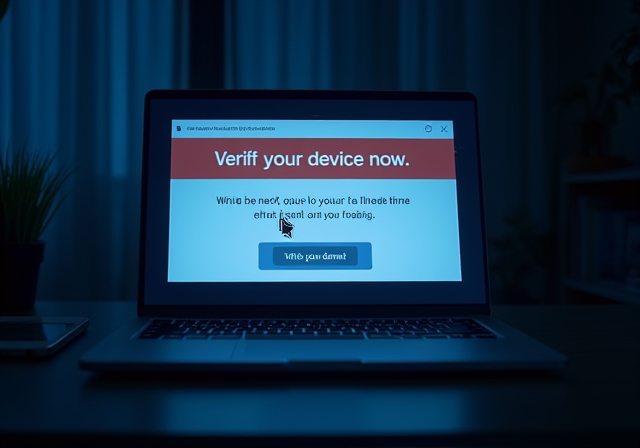
The path is plain, which is exactly why it worked. Step one: attackers obtained a leaked email list from a third-party marketing service breached earlier. Many addresses belonged to real Trezor users. Step two: they sent a “security upgrade notice” subject-lined “Your device is at critical risk — verify now,” from a domain visually close to the official one.
Step three is the key. The “verify now” button did not point to trezor.io. It went to a high-fidelity mirror site asking you to “import your recovery seed to confirm device status.” If you were in a meeting, had just moved a large transfer, or got rattled by “critical risk” and typed the 12 or 24 words in order, the wallet drained within minutes.
Step four is laundering. Funds were split across hundreds of intermediate addresses, then funneled through mixers and cross-chain bridges. Hours later, all the user could see was an unrecoverable on-chain trail.
Why the damage stacked up to $284M
A single phishing email cannot drain that much. Reaching $284 million stacked several factors.
First, the list was unusually precise — almost certainly hardware wallet owners holding sizable positions for years. The expected payoff per target dwarfed ordinary phishing. Second, fidelity was high: email style, phrasing, and the “verification page” all sat close to the real site. Third, timing was deliberate — the campaign clustered around a noisy industry news cycle, when “security” was already being shouted at users.
A subtler factor: hardware wallet owners tend to assume they are already safe. That “I use a cold wallet, I cannot be phished” feeling is itself the sharpest entry point.
Hardware stopped the key, not the seed flow
The shortest version: a hardware wallet stops the private key from leaving the chip, but the seed phrase is the wallet’s resurrection password — type it anywhere and the other side rebuilds the same wallet on their device.
In this campaign attackers never touched the physical device. They only needed those 12 or 24 words. Once a seed leaks:
- they can recover an identical wallet on their own device;
- they can wait for your next large deposit before draining, so you think nothing is wrong;
- swapping to a new hardware wallet does not help — the problem is not the device, it is the words.
Which is why every serious vendor repeats the same line: the official side will never ask you to type your seed via email, support chat, or a web page. That is not politeness; it is the only reliable interception line for this class of attack. For the wider picture, read hardware wallet phishing vectors, which breaks the six common paths apart.
A few things to do immediately
If you also use a hardware wallet, here is the short list, easy to hard:
- Stop treating email as trustworthy. Any message demanding you “verify your seed” or “reconnect your wallet” defaults to phishing until you confirm via an official bookmark or app.
- Inspect a domain by characters, not by brand. trezor.io, tr3zor.io, trеzor.io (Cyrillic “е”) look identical at a glance. Train the character-by-character habit in spotting phishing links fast.
- Never type your seed phrase anywhere — except when restoring a wallet on a never-online device screen. No web page, desktop client, or “support” chat.
- If you suspect your seed touched a fake page, follow suspected seed leak response. First move: migrate funds to a freshly generated wallet.
- Read AI-era phishing defense — the next wave is likely AI-driven support chats, not email, so update your judgment in advance.
What the event actually says
Pull back, and it is the old pattern: funds do not die at the cryptography layer, they die at the human and process layer. Hardware wallets made remote key theft close to impossible, so attackers shifted the cost back onto people — onto the moment you open the email, copy the URL, and type the twelve words.
Each dollar of $284M is a cost-effectiveness test of social engineering. The next campaign may not be email — it could be SMS, Discord DMs, or an AI-cloned “support call.” The underlying logic does not change: what they want is the seed, the signature, or the approval, never the chip.
The hardware held, the people and process did not
The takeaway is not “should you still use Trezor.” It is cooler: hardware wallets remain a relatively safe choice, on the condition that you put them inside a full set of phishing-resistant habits. The harder the device, the more attackers route around it. Bookmarking official domains, putting “type the seed” on a lifetime do-not list, and treating “act now” as a phishing tell instead of an instruction protect far more than upgrading to a pricier device. If $284M only buys “I’ll be more careful next time,” it is too expensive a tuition. What it should buy is the rule that hardware blocks half the surface, and you have to hold the other half yourself.
This article is educational, not investment advice. Operate together with your device, scenario, and official documentation.
This article is for education only and is not financial advice. Crypto is volatile and risky — only ever risk what you can afford to lose.