After a Drainer Empties Your Wallet, Is There Any Path to Recovery?
Let me say this first: most drained funds are never recovered. That reality has to lead, because if you operate with “I will definitely get it back,” you both waste the golden hour and become easy prey for the “recovery agency” scams that swarm the next few days.
But “will not be recovered” is not the same as “do nothing”. In the first hour, first day, first week, and first month after the event, there are concrete moves that meaningfully shift the outcome. Let me lay them out chronologically.
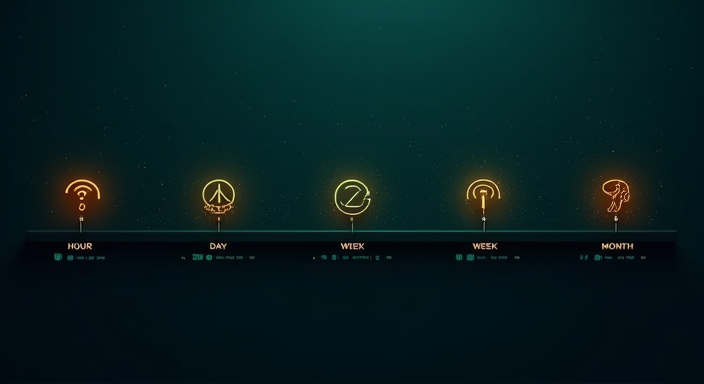
The first hour: stop the bleeding
The priority is not “get it back,” it is prevent the next chunk from leaving. Drainer toolkits almost always include a cleanup phase: after one approval, the attacker contract may pull different tokens over hours or days.
Within the first hour:
- Open revoke.cash and revoke every approval in the compromised wallet — no filtering, all of them.
- Move any assets still in your control out to a brand-new wallet. Generate that new wallet’s seed fresh on a clean device, written on a physical medium. Do not generate it on the compromised device.
- Disconnect all wallet extensions, log out of every dApp, and ideally wipe browser local storage.
- Take the compromised device offline and start evaluating whether malware is installed — do this, but do not let it delay steps 1–3.
Order matters. In real cases, the second loss often hits within 90 minutes of the first — the victim is still inside the compromised wallet moving remaining tokens, and that signature hands over another approval.
The first day: preserve on-chain evidence
After the bleeding stops, day one is about evidence and monitoring:
- In Etherscan / Arbiscan / the relevant explorer, screenshot transaction hashes, timestamps, from/to, and token lists for every attack tx.
- Use Arkham, Breadcrumbs.app, or Chainabuse to add the attacker addresses to a watchlist.
- Cross-reference attacker addresses with known drainer clusters — see the primary collection wallets covered in the Safe Labs 5,000 drainer address report.
- If funds crossed chains, archive the same data for every intermediate address on every chain.
Evidence has two uses: police reports and exchange escalations need it; and if a class action or asset return program ever spins up, you must have entered the evidentiary window with records on file.
Who to contact in the first 24 hours
In priority order:
- If funds land on a CEX: when on-chain tracing shows the attacker deposited into a centralized exchange, contact that exchange’s anti-fraud or compliance email immediately. Major exchanges have dedicated fraud forms; submit tx hashes and your wallet address. Fast response sometimes results in a freeze on the suspect account. This is one of the few real recovery paths.
- Local law enforcement / cybercrime unit: in the US, FBI IC3; in Europe, national cybercrime portals; elsewhere, the equivalent body. The value of filing is twofold — formal record for any future civil action, and increasingly your case can be rolled into a larger cross-border investigation.
- Chain-analysis firms: Chainalysis, TRM Labs, Elliptic mostly serve law enforcement and enterprises, but they also accept reports. Your case can end up in a monthly report and gain visibility.
Warning: do not engage with any “asset recovery expert” who DMs you. The first days after an incident attract a wave of secondary scams. Anyone asking for an upfront fee, or asking for your seed phrase “to trace,” is a scammer.
Mixers and bridges: a realistic picture
Drainer toolkits move funds through a layer of Tornado Cash or a similar mixer and then bridge to other chains. The impact on recovery:
- Once funds enter a mixer, on-chain analysis usually stops there. A small number of research teams produce partial relational pictures, but as an individual victim you do not have access to that capacity.
- Bridge tracing depends on the bridge’s data availability. Major bridges are traceable, but each hop drops probability.
- Since the 2022 sanctions, Tornado Cash exits have been blacklisted by many CEXs. If post-mixer funds land at a major exchange, they often get auto-frozen on deposit. That is one of the few facts working in the victim’s favor.
In other words: mixers are not an absolute black hole, but as an individual chasing recovery, once funds cross the mixer, your only paths are law-enforcement coordination or exchange interdiction.

The first week: figure out how it happened
After bleeding control, reporting, and evidence work, the first week has to answer one question: how did the money actually leave? Not for blame, but to make sure your next wallet does not follow the same path.
Possible entry points:
- Signature phishing: an off-chain blob (Permit / setApprovalForAll) you signed.
- DM-delivered links: a mint or claim link on Telegram / Discord.
- AI-driven impersonation: see AI deepfake crypto scams.
- Device malware: a wallet extension or local malware replaced what was being signed.
- Seed exposure: see the suspected seed leak response.
Once you locate the entry, rebuild every habit downstream of it. Extension-level compromise means switching devices. Social-channel compromise means closing all unsolicited DMs.
| Entry vector | Follow-up action |
|---|---|
| Signature phishing | Relearn signature blocking; study the five 2026 patterns |
| Device malware | Retire old device / reinstall OS |
| Seed exposure | New wallet across the board + full asset migration |
| Social engineering | Close unsolicited DM channels; treat all “support” as fake |
| Fake bridge front-end | Official domains only + small test transfers |
The first month: mindset and rebuild
A drained wallet often does more psychological damage than financial. People fall into two extremes: quit crypto entirely, or revenge-trade to “make it back.” Neither is healthy.
A middle path: give yourself two to four weeks completely off on-chain activity and pull life focus toward non-crypto things; in parallel do a wallet rebuild — new device, new seed, new backup method, new cold/hot split, walking basic crypto security habits from scratch; and never chase high-risk plays to “earn it back,” because drainer victims are a secondary target pool for scammers.
Realistic expectations on reporting
A common question: does reporting actually help? Honestly, the probability that a single report directly recovers funds is low. But the value sits in three places: it triggers upstream/downstream platform cooperation (CEXs respond faster to law-enforcement requests), it makes you eligible for cross-border combined investigations, and it positions you for future distribution mechanisms if a drainer crew is taken down. Treat reporting as a long-running registration, not a short-term surgery.
A last move: write your own incident note
Once the dust settles I strongly recommend something boring but useful: write yourself an incident note — timeline, entry vector and signature path, what you did right, what you missed, what changes from here.
The note is not for anyone else. It is for the version of you a year from now, who may have relaxed. Drainers are not going away. Future phishing waves are guaranteed. The only durable thing keeping you safer is the judgment you took away from this incident.
The money may not come back. But judgment stays with you. When someone has to be a victim, that is the most valuable thing to walk away holding.

This article is for education only and is not financial advice. Crypto is volatile and risky — only ever risk what you can afford to lose.