How AI Deepfakes Are Actually Used In Crypto Scams: Real 2026 Cases
The instinct of trusting what you see is the single instinct you have to retrain this year. Almost every painful story landing in my inbox during the first half of 2026 has the same shape: a synthetic face, a cloned voice, or a fabricated short video pushing the victim to sign an approval, wire USDT, or read out a seed phrase. The combined Q1 2026 reporting from Sumsub, Chainalysis and Resemble shows deepfake-driven financial fraud incidents are up 340% year over year, with the narrower “AI impersonation” slice jumping a further 1400%. Every week someone messages me asking whether the CEO they just spoke to on video really wanted that three-million-dollar transfer.
The three scripts attackers actually use
Over the past six months almost every case I investigated fell into one of three recurring shapes.
| Script | Who they imitate | Channel | What they want |
|---|---|---|---|
| A | Project CEO or CFO | Zoom, Google Meet, Teams | Wire or push USDT immediately |
| B | Crypto KOL or streamer | YouTube Live, X Spaces, TikTok | Funnel you into a fake AI quant copy-trade site |
| C | A relative or close friend | WeChat, Telegram, WhatsApp voice notes | Emergency cash, “I have been detained”, private transfer |
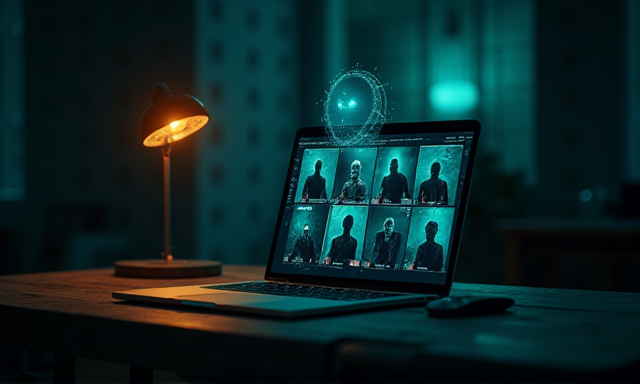
Script A surfaced publicly in Hong Kong in February 2026 when a finance employee joined a video call where every other participant was synthesized. The published loss was around two hundred million HKD, split across fifteen transfers. Script B floods X every week: a short “KOL alpha drop” clip with a follow-up link to a fake quant platform. Script C is brutal because attackers only need three to ten seconds of public audio to clone a usable voice.
How a deepfake turns into stolen on-chain funds
The full chain is five steps long. Reading it slowly is the cheapest defense you have.
- Source harvest — they pull face and voice samples from your public posts, podcasts, X Spaces.
- Scene setup — they build urgency. “Deadline tomorrow.” “I am stuck at the airport.” “Your son was arrested.”
- Real-time synthesis — modern laptops run live face swap and voice clone at under 200ms latency.
- On-chain trigger — they push you to sign
setApprovalForAll, scan a QR, or send to a “safe address”. This is often paired with drainer tooling; my piece on what wallet drainers are and how to block them covers the technical side. - Fast laundering — funds get split, bridged, mixed within minutes. On-chain recovery is rarely possible.
Each step gives you a chance to hit pause. The whole point of a deepfake attack is to remove the impulse to pause.
Moves you can apply immediately
Before any financial action triggered by a call or video, I run this short routine.
- Ask for a motion the model cannot pre-render: hand to ear, profile at sixty degrees, reading a number you say aloud right now. Live face swap still breaks on occlusion and fast lighting changes.
- Hang up and call back on the number already saved in your contacts, never the one shown in the meeting.
- Use an out-of-band code word agreed in advance with family. Any voice asking for urgent money must say it.
- Refuse every on-chain signature requested through a video call. Real colleagues do not run wallet signing over Zoom.
- Inspect the domain before any link click. My short walkthrough on spotting phishing links fast is a good companion read.
Why 2026 specifically
Three forces converged. Consumer GPUs now run live face swap in real time. Public short-form video gave attackers an essentially infinite training set. And blockchain transfers remain irreversible, so a single success funds a year of further attacks. The Sumsub 2026 report flagged a stat that stuck with me: untrained users correctly spot a deepfake only 25.5% of the time. Three out of four times, you will believe it.

A family and team protocol you can copy
I keep this protocol pinned next to my monitor.
- A shared family passphrase that any money-related request must include.
- A finance rule: any video-call transfer request requires a callback to a known mobile before execution.
- A blanket no on “AI quant copy trades” and “KOL alpha rooms”; cross check against my notes on spotting scam emails and SMS.
- A scheduled approval audit using the wallet self-audit checklist.
Training the delay reflex
The lethal edge of a deepfake is time pressure. Your instinct to obey a boss or rescue a family member is exactly what the attacker buys. From 2026 onward, seeing is no longer evidence; only process is evidence. An out-of-band check is a process. A callback is a process. A five-minute cool-down before any signature is a process. Each one tears a page out of the attacker’s playbook.
Tonight, send one message to your family: from now on, anyone on a screen asking for money has to say the code word. That single sentence will protect you more than every security article you have read this year.
This article is for education only and is not financial advice. Crypto is volatile and risky — only ever risk what you can afford to lose.