What Are Wallet Drainer Tools And How To Stop A One-Click Wipeout
“Drainer” was a niche term in 2024. By 2026 it is a headline word. Safe Labs’ early-2026 on-chain analysis labeled roughly 5,000 addresses as drainer-tool related. These kits sell for a few hundred dollars at the entry tier, run on subscription pricing, ship with admin dashboards and conversion analytics, and behave like proper SaaS products. The operator never has to write code. They just buy traffic and run a phishing front-end, and within seconds anything signable in a victim’s wallet leaves. This is not theoretical. Inferno, Pink, Angel, and Rugged kits do it every day.

What a drainer actually does
In one line: a drainer is a packaged combination of signature lures plus automated theft logic. The operator handles traffic and lure pages. The tool does the rest:
- Scans the victim wallet for valuable assets: native coin, stablecoins, NFTs, staked positions, LP tokens.
- Ranks each asset by liquidation friction: liquid stablecoins first, instant-sale NFTs second, staked and LP last.
- Generates the matching signature prompt:
permit,permit2,setApprovalForAll,safeTransferFrom, sometimesdelegatecall. - The moment the victim signs, the script calls a prepared contract that pushes assets to a staging address, then bridges and mixes within minutes.
From the user’s point of view it is a single signature. One signature, entire wallet emptied.
The signature types drainers love and what each one really does
| Signature | Marketed as | Real effect | Typical loss |
|---|---|---|---|
permit / permit2 |
“Gasless approval” | Unlimited stablecoin allowance to attacker | five to seven figures USD |
setApprovalForAll |
“NFT approval” | Entire NFT collection transferable | six to eight figures USD |
safeTransferFrom |
“Sign to claim airdrop” | NFT moves directly to attacker | four to six figures USD |
Misused eth_sign |
“Login signature” | Replayable transfer message | five to seven figures USD |
Advanced delegatecall |
“Smart contract upgrade” | Smart contract wallet hijacked | seven to nine figures USD |
The single most dangerous one is permit2. It is sold as “no gas needed, totally safe,” which short-circuits the user’s caution. In reality it grants the attacker unbounded, time-unlimited spending rights over USDT, USDC, DAI and other major stablecoins.
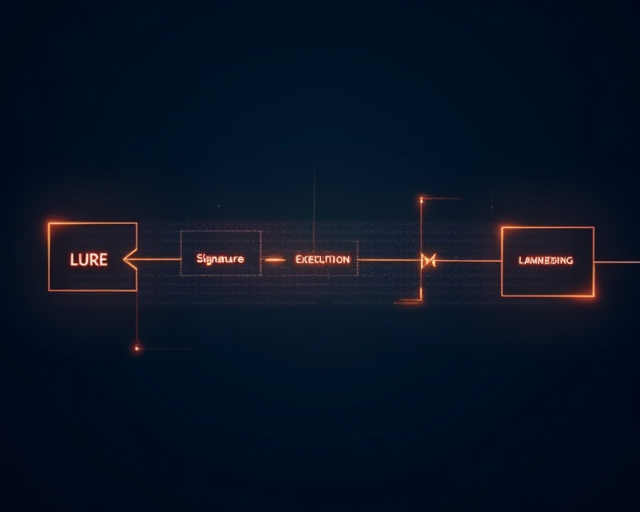
The drainer kill chain
A typical operation looks like this.
- Traffic — fake airdrop pages, mint pages, project snapshot sites, fake CEX deposit screens, “verify your wallet” landing pages. More on this in the new crypto phishing patterns of 2026.
- Lure — once you connect, a wallet signature prompt fires through WalletConnect or EIP-1193 with deliberately vague text and zero amount displayed.
- Execution — your signature triggers the drainer contract, which auto-iterates through assets by descending dollar value.
- Laundering — funds move to staging, then through cross-chain bridges into a mixer, all within minutes.
End to end, under sixty seconds from click to empty.
A three-layer defense
I organize defenses in layers because no single layer catches every variant.
Layer one: wallet hygiene
- Keep large balances in a cold wallet. The hot wallet you sign with daily holds only one week of working funds.
- Use a wallet that previews signature risk: Rabby, Pocket Universe, Wallet Guard. They translate signature payloads into “this much value will leave.”
- For real money use a smart-contract wallet plus multisig (Safe, Argent). See what a multisig wallet is.
Layer two: signature discipline
- The moment you see
permit,permit2, orsetApprovalForAll, stop. Identify the token, the spender, and whether the operation is necessary. - Treat “gasless signature” as a drainer until proven otherwise. Real projects do not ask you to sign messages you cannot read.
- Verify that the
spendermatches the project’s published official contract.
Layer three: routine
- Run the wallet self-audit checklist weekly, revoking stale approvals.
- Walk away from any “urgent” signature for five minutes before deciding.
- Never interact with a brand-new protocol from your main wallet.
If you just signed something suspicious
- Open revoke.cash (or the etherscan token approvals page) immediately and revoke recent approvals from newest to oldest. If assets have not been swept yet, every second counts.
- Push remaining assets to a brand-new address. Even a freshly created temporary address beats leaving them in place.
- Check bridges and staking protocols for outstanding delegations. Some drainers unstake before sweeping.
- Quarantine the wallet permanently, retire the seed, and run through the suspected seed leak response.
Why drainers became a standard product in 2026
What worries me is not how clever any single drainer is. It is the commercial maturity. After Inferno publicly “retired” in 2024, the source and UI were forked repeatedly. The result is a SaaS-style underground market: monthly subscriptions, revenue share, customer support groups, dashboards, and even competitive comparison charts. The 5,000 Safe Labs addresses are a fraction of the live operator footprint.
The implication is that the ordinary user is no longer up against “a bad person.” They are up against a productized industry. Defense has to move from luck to process.

Three concrete moves before bed tonight
If you can spare twenty minutes, do these three:
- Open revoke.cash and walk through every approval on your main wallet from the last six months. Revoke every project you no longer use.
- Switch your daily wallet to Rabby, or install Pocket Universe or Wallet Guard.
- Move anything over $1,000 from the hot wallet to a hardware wallet or a multisig Safe.
These three actions block roughly 90% of live drainer attacks. The remaining 10% comes down to whether you can hold a thirty-second pause before each signature. That pause is the one cost the drainer industry has no way to reduce. Save that pause for yourself, every time.
This article is for education only and is not financial advice. Crypto is volatile and risky — only ever risk what you can afford to lose.