Backing Up a Hardware Wallet Seed: Things People Get Wrong
You spend a few hundred dollars on a hardware wallet, unbox it, set a PIN, and watch 24 English words appear on the screen. A thought drifts through your head: “Now I don’t really have to worry about the seed phrase — the device handles it.” That feeling is intuitive, and it’s also the most dangerous misconception hardware wallet users fall into. A hardware wallet doesn’t mean you can back up the seed less carefully — it means you must back it up more carefully.
The reason is simple. A hardware wallet locks your private key inside a never-online secure chip. It protects how the key is used, not the fact that the key exists. If the device gets dropped, lost, seized at a border, or simply fails after a decade, the only thing that pulls you back to your assets is that paper or metal plate.
What the device actually does — and doesn’t
The hardware wallet’s job is specific: store the private key in an offline secure element, sign every transaction inside that chip, and hand back only the signature. That blocks an entire class of attacks — malware, clipboard hijackers, fake DApps.
What it does not do: it doesn’t back up your seed (those 24 words are the only source — once they’re lost or miscopied, the coins are gone); it doesn’t copy the seed to any cloud (reputable vendors are explicit about this); and it doesn’t stop someone from restoring your wallet elsewhere if they get a look at the words. So “I have hardware, the seed doesn’t matter” simply doesn’t hold. The chip protects the signing environment; the seed is ownership itself.

Devices get lost, break, become obsolete — the seed is the lasting part
Hardware wallets are not maintenance-free for life. They get left at customs, packed into the wrong moving box, develop screen problems after five years, lose firmware support when the vendor pivots, or simply get replaced when you want a newer model.
In all of those cases, the thing that migrates your assets from old environment to new is the seed on that paper. In other words: hardware wallets are consumables; the seed is permanent. Treat the seed as the “backup” and one quiet accident will leave you with nothing. The reasoning is the same as in seed phrase backup methods.
A metal plate plus a hardware wallet is the most boring and most reliable pairing
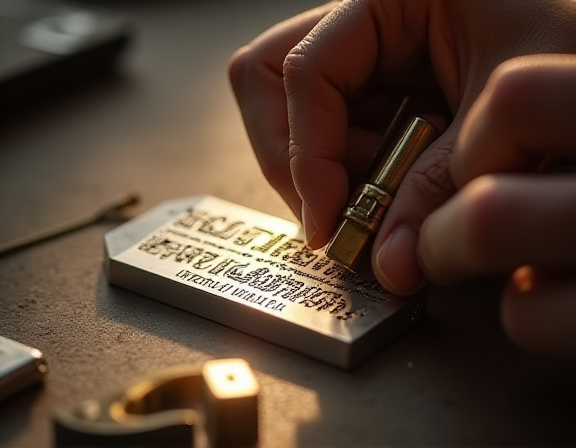
So how should you actually back the seed up? The single habit worth building is to copy it onto a metal seed plate for long-term storage. Paper is vulnerable to fire, water, humidity, pests. A metal plate raises “I’ll outlive that paper” to decades.
For a normal household: keep a primary plate in a safe or bank deposit box, and a secondary plate (or laminated paper) in a different physical location — a relative’s home, an office, a long-term storage locker. Neither copy is ever digitized: no photos, no typing, no cloud uploads. This pairs naturally with the hardware wallet itself. The chip blocks network-side attacks; the plate blocks time and physical accidents. Together they form the actually-stable scheme for “hold a large position for years.”
If you worry the backup itself could be peeked at, add a BIP39 passphrase on top — a “25th word” that lives only in your head.
Pitfalls when switching devices or restoring
Backing up the seed isn’t “write it once and move on.” A few specific traps come up during restore and device migration.
Test a small-amount restore before moving large funds in. Use the written words to restore a fresh wallet, verify the address matches, then fund it. This catches almost every “years later I find out my backup was wrong” disaster.
Restore only on the hardware device itself. Any flow that asks you to type the seed into a computer, phone app, or web form is exposing it to a networked environment — the very thing the device was meant to avoid. Even same-brand desktop apps should only show balances; never type the seed into them. The attack surface is laid out in hardware wallet phishing vectors.
Wipe the old device when you replace it. Confirm the new device shows the same addresses, then perform the factory reset on the old one. Don’t pass on, return for repair, or throw out a hardware wallet you haven’t wiped.
Never photograph the seed “just to help write it down.” A “temporary” photo lived in your camera roll long enough for cloud sync to grab it. Months later, a breached cloud account may still serve that “deleted” image from a thumbnail cache.
Common confusions
“Typing the seed into the hardware wallet vs a software wallet — what’s the difference?” The first keeps the seed inside the secure chip and never lets it touch a connected computer. The second exposes it to networked memory. Different orders of magnitude on the attack surface.
“Can I split the seed in half — twelve at home, twelve at my parents’?” Tempting, but flawed. BIP39 is not “first half plus second half equals the answer.” Anyone holding half can drastically shrink the brute-force space. For real splitting, use a Shamir-based scheme (SLIP-39), not a manual cut.
“My hardware wallet is lost but the seed is safe — am I in a rush?” Not really. With a strong PIN and a passphrase, a thief can’t realistically drain the device fast. The only true emergency is when the seed itself may have leaked — in that case follow what to do after a suspected seed leak immediately.
The chip guards the key; you guard the seed
A hardware wallet gives many people their first real feeling of “I own my crypto, I hold the keys.” But it carries a side effect: the false comfort of “the hardware has me covered” makes some users more careless about seed backup than software wallet users. The truth runs the other way — because hardware wallets usually hold larger, longer-term positions, the seed backup behind them should be more rigorous than for any hot wallet.
The cleanest division of labor: the device keeps the private key out of any networked machine; you keep the seed out of time, accident, and other people’s eyes. When both halves hold, the hardware wallet finally lives up to “long-term vault.” This article is education, not financial advice.
This article is for education only and is not financial advice. Crypto is volatile and risky — only ever risk what you can afford to lose.