How Did FTX Collapse? What Ordinary People Should Learn From It
In November 2022, FTX — the world’s second-ranked crypto exchange, once valued in the tens of billions — went from “industry benchmark” to “bankruptcy filing” in under a week. Countless users had their assets frozen and never got them back. It wasn’t breached by hackers, nor was it some technical failure — what pushed it off the cliff was the oldest problem of all: using customers’ money for something else. Understanding this thread matters more than remembering any name.
How the collapse happened
The trigger was a report about the asset composition of an FTX-affiliated firm, which sparked market doubts about its solvency. What followed played out like a textbook bank run:
- Trust cracks: media revealed that much of the “assets” at FTX’s affiliated trading firm were actually FTX’s own platform token, whose value didn’t hold up to scrutiny.
- The run begins: users sensed something was wrong and rushed to withdraw. Within a day or two, withdrawal requests reached billions of dollars.
- The hole is exposed: FTX simply couldn’t produce that much money — because the assets customers deposited had long been diverted to plug the affiliate’s losses and make risky bets.
- Freeze and bankruptcy: the platform halted withdrawals, then filed for bankruptcy. Money that on paper belonged to users became a long list of unredeemable claims.
In the end, users assumed their coins were sitting quietly on the exchange, when they had long been put to use. The balance an exchange shows is just a number; there isn’t necessarily an equal amount of real assets behind it.

Why ordinary users had no clue
Before FTX blew up, its image couldn’t have looked better: celebrity endorsements, stadium naming rights, frequent appearances in regulatory settings. That points to a counter-intuitive fact — “looks legitimate and is huge” does not equal “your money is safe.”
- Brand halo masks risk: the more pervasive the advertising, the more users default to “it won’t fail.”
- Balance numbers create an illusion of safety: you can see the number in your account but not whether the exchange is misusing funds behind it.
- Withdrawals worked fine day to day: before the run, withdrawals were normal, constantly reinforcing the “it’s safe” illusion.
This stems from the same misconception many hold about exchange security: equating “big platform” with “zero risk.” But once the platform itself fails, the bigger it is, the more people it drags down. Similar blowups have recurred throughout the industry’s history — compare other cases in the crypto history timeline.
The shared script of exchange blowups
FTX is no isolated case. Put several major exchange failures side by side and their scripts are strikingly similar, almost always hitting the same steps:
- Step one: expansion and halo. The platform grows fast, marketing is everywhere, creating a “too big to fail” impression.
- Step two: quiet misuse. Customer assets are quietly lent out, invested, or used to plug an affiliate’s hole; the books diverge from reality.
- Step three: a spark. A report, a price crash, or a whale withdrawal punctures the solvency cloud.
- Step four: run and freeze. Panic withdrawals instantly enlarge the hole; the platform can’t hold and halts withdrawals.
- Step five: bankruptcy and a long chase for repayment. Users’ “balances” become claims in a queue, with how much and when uncertain.
See this script and you’ll realize the real risk signals often show before the blowup: excessive marketing, own-token propping up assets, vagueness about where funds go. Ordinary people may not see through the inside story in advance, but they can absolutely minimize their exposure with “diversify + self-custody.”
Lessons ordinary people can take away
FTX’s details are complex, but the takeaways for ordinary people are very plain:
| Lesson | What to do |
|---|---|
| An exchange is an IOU, not a safe | Withdraw long-held assets to your own wallet |
| Don’t bet everything on one platform | Spread across platforms and self-custody wallets |
| Beware a platform’s own token as “assets” | One firm propping its books with its own token is a danger sign |
| Smooth withdrawals ≠ absolute safety | Stay diversified and alert even in calm times |
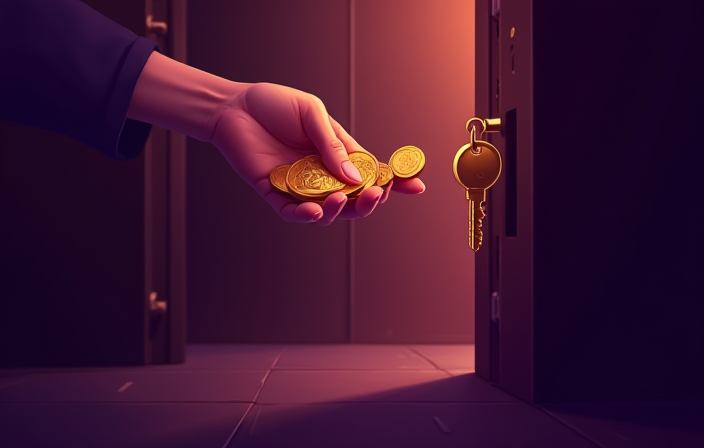
The one line worth remembering most is the long-circulating crypto saying — “not your keys, not your coins.” Coins on an exchange are essentially what the platform owes you; only by withdrawing to a wallet whose private key you control does ownership truly become yours.
Does this mean you can’t use exchanges
No. Exchanges remain necessary tools for trading and on/off-ramping; the question is how you use them. Treating one as a “transit station” rather than a “vault” is the safer posture:
- Keep trading funds on the exchange, long-term holdings in a self-custody wallet.
- Spread across platforms, don’t pile everything on one.
- Watch whether withdrawals are normal; at rumors of widespread withdrawal trouble, protect yourself first — withdraw, then wait and see.
- Set a simple set of risk management rules: first ask “if this platform vanished tomorrow, how much would I lose,” then decide how much to keep there.
Back to basics
FTX wasn’t the first exchange to blow up, and it won’t be the last. Its real lesson has nothing to do with gossip and everything to do with a plain truth about assets: the safety of wealth someone else holds for you depends on their honesty and operations — two things you can neither see nor control. Rather than chasing debt afterward, make it a habit to “hold yourself whatever you can hold yourself.”
This article is educational and does not constitute investment advice. Exchanges carry operational and counterparty risk; diversify rationally and stay within your means.
This article is for education only and is not financial advice. Crypto is volatile and risky — only ever risk what you can afford to lose.