Who Is the Bitcoin Pizza Guy? The Story of 10,000 BTC for Two Pizzas
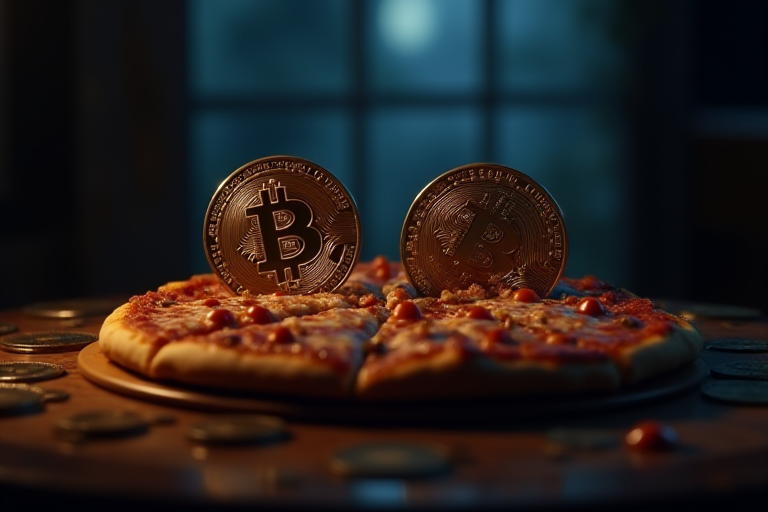
Every May 22, the crypto community “commemorates” a slightly bittersweet day — Bitcoin Pizza Day. It comes from a real 2010 transaction: a programmer traded 10,000 bitcoins for two pizzas. At later prices, those two pizzas count as the most expensive meal in human history. But if you treat it only as a “lost a fortune” joke, you miss what the story is truly worth pondering.
How it happened
In 2010, bitcoin was still a new toy in geek circles, accepted by almost no merchants and with no real market price to speak of. A programmer named Laszlo posted on a forum: I’ll pay 10,000 bitcoins — can anyone get me two pizzas? A few days later, someone took the offer, ordered pizzas for him, and accepted the 10,000 bitcoins.
This seemingly ordinary order became the landmark event of bitcoin’s first use to buy a real-world good. Before that, bitcoin was mostly an experiment passed among programmers; this single transaction proved for the first time: it really can be spent like money.
The often-misread point behind the “most expensive pizza”
Looking back today, the later value of those 10,000 bitcoins is staggering, so the event is often told as a tragicomedy of “trading a mountain of gold for a meal.” But there’s a classic hindsight fallacy hiding here:
- At the time, those 10,000 bitcoins were nearly worthless. No market, no acceptance, no idea what its future held. Laszlo traded “something nobody wanted” for real pizzas — at that moment, it was actually a pioneering transaction that helped bitcoin start circulating.
- Judging yesterday’s decision by today’s price is unfair. We feel “he lost big” only because we already know the ending; no one in 2010 could foresee any of this.
See through this layer and you’ll find the story’s real theme isn’t “how foolish he was” but — value changes dramatically over time, and people within it always decide with incomplete information. That’s exactly the same as our state of mind facing the market today.

The mindset takeaways for ordinary people
Rather than the regret of “if only I’d known,” this story is worth taking away a few thoughts about mindset:
- Don’t berate yourself with hindsight: many lament “if only I’d bought / hadn’t sold back then.” But remember, any decision can only be based on the information known at the time; the “right answer” that’s clear only afterward didn’t exist then. Clinging to it only feeds anxiety.
- Beware the emotion of “missing out”: the pizza story is often used to stir FOMO — “see how scary it is to miss bitcoin.” But the truly healthy attitude is to accept that “no one can catch every opportunity,” rather than being pushed into reckless decisions by chasing-pump FOMO.
- Value needs time to be tested: no one then could be sure of bitcoin’s future, just as no one today can be certain of any new project’s ending. Rather than betting on some “next bitcoin,” build principles you can execute long-term — the core of risk management.
How the story often gets “misused”
Worth watching: the “pizza guy” story is often taken out of context today to manufacture anxiety. Some shilling voices say: “See how much people regret missing bitcoin, so you can’t miss out this time!” — and then conveniently pitch some so-called “next 100x coin.”
This is precisely the biggest misreading of the story. What it truly tells us is not “grab every chance to get rich” but the opposite two things:
- No one can foresee the future: Laszlo couldn’t see the ending, and those touting “guaranteed gains” today can’t either. Any confident “sure win” promise deserves a question mark.
- Missing out is the norm, not a tragedy: a person “misses” countless opportunities in life — that’s normal. Magnifying every miss into pain only leads you to worse decisions in the next impulse.
When someone uses “look how much the pizza guy lost” to rush you to get on board, that’s usually not helping you but exploiting your fear of missing out.
Why this small thing has been remembered for years
An order for pizzas is brought up year after year in the crypto world because it acts like a mirror, reflecting the field’s most core elements: the early wildness and naivety, the dramatic shifts in how value is perceived, and people’s various states of mind facing uncertainty. Like Satoshi Nakamoto releasing the whitepaper, it’s a node in this history that shouldn’t be forgotten — one about the birth of technology, the other about the awakening of value.
A final note
The real meaning of Bitcoin Pizza Day isn’t to remind you “you should have hoarded coins” but something more important: we can only ever choose with incomplete information, and later prices shouldn’t become the yardstick to judge the past. Rather than endlessly churning in “what if,” put your attention back on what you can control now — understanding risk, managing your mindset, making decisions you can stick to long-term. That is the most worthwhile part this “most expensive pizza” leaves us.
This article is educational and does not constitute investment advice. Past prices don’t represent future performance; view value swings rationally.
This article is for education only and is not financial advice. Crypto is volatile and risky — only ever risk what you can afford to lose.